Should Congress Remove Restrictions That Prevent VA Doctors From Prescribing Medical Marijuana

Congressman Wants To Remove Restrictions Preventing VA Doctors From Recommending Medical Marijuana

Blumenauer’s “Veterans Equal Access Amendment” would Remove Restrictions Preventing VA Doctors from Recommending Medical Marijuana


This week, when the U.S. Place of Representatives is relied upon to consider the FY 2016 Military Construction, Veterans Affairs and Related Agencies Appropriations bill, Congressman Earl Blumenauer (OR-03) arrangements to offer a change to make it simpler for qualified veterans to get to restorative maryjane.

Right now, the Veterans Administration (VA) particularly precludes its therapeutic suppliers from finishing structures brought by their patients looking for proposals or assessments in regards to a Veteran's cooperation in a state restorative pot program. Congressman Blumenauer's change guarantees that no trusts made accessible to the VA can be utilized to execute this forbiddance, which would, as a result, strike it down. The change is as of now co-supported by Representatives Tom Reed (R-NY), Sam Farr (D-CA) and Dana Rohrabacher (R-CA).

"While there is no single way to deal with helping our country's veterans, medicinal maryjane is demonstrated to help in treating post-traumatic anxiety and traumatic cerebrum wounds every now and again endured by veterans," said Congressman Blumenauer. "States are listening to their occupants on the advantages of restorative weed, including veterans, and are changing their laws. It is inadmissible for our injured warriors to be constrained out of the VA framework to just look for a suggestion on whether therapeutic maryjane is a decent treatment alternative. We ought not be counteracting access to prescription that can help them manage these wounds to survive and flourish. I urge my associates to show empathy to our veterans and pass this change."

Thirty-six expresses, the District of Columbia and Guam have passed laws that accommodate legitimate access to restorative weed in some structure. Therefore, well more than one million patients the nation over, including numerous veterans, now utilize restorative weed at the suggestion of their doctor to treat conditions going from seizures, glaucoma, uneasiness, interminable torment and sickness. There are likewise nine states and the District of Columbia that now permit doctors to prescribe medicinal pot for the side effects of Post-Traumatic Stress (PTS), because of a developing group of recounted proof recommending that weed offers alleviation when nothing else has and can be a more viable distinct option for other and now and then addictive doctor prescribed medications.

In February, Congressman Blumenauer additionally presented H.R. 667, Veterans Equal Access Act, to address this essential issue. The bill is cosponsored by Representatives Dana Rohrabacher (R-CA), Walter Jones (R-NC), Justin Amash (R-MI), Tom Reed (R-NY), Richard Hanna (R-NY), Sam Farr (D-CA), Jared Polis (D-CO) and Dina Titus (D-NV).

"The Veterans Equal Access correction will take into account an open line of correspondence between a veteran and her or his Department of VA consideration suppliers in expresses that have chosen to sanction medicinal cannabis," said U.S. Naval force Veteran T.J. Thompson. "This is a significant initial phase in permitting veterans equivalent access to medicinal cannabis through restoring that First Amendment right of the right to speak freely between a patient and consideration supplier, a privilege which has been abused by a real crevice in approach and law on the government level with crippled veterans. With the sanctioning of restorative cannabis, measurements have indicated suicide and compulsion rates diminish, which are both real torment among veterans."

"Veterans for Safe Access and Compassionate Care is to a great degree grateful for the authority and empathy by Rep. Blumenauer. The section of this correction to the MilCon-VA Appropriations bill would permit Veterans to have the same open dialog with our specialists as our regular citizen partners have about the dangers and advantages of therapeutic weed for incapacitating conditions," said Scott Murphy, President of Veterans for Safe Access and Compassionate Care. "As seen in late studies and on the CNN narrative Weed 3, it is pass that the American individuals bolster national therapeutic maryjane change. It is far-fetched that their aim is to abandon enduring Veterans."

"Veterans with PTSD and interminable torment who depend on the VA for their health awareness are not being managed the same access to state medicinal pot programs as their non-veteran kindred inhabitants," said Michael Liszewski, Government Affairs Director of Americans for Safe Access. "With 22 veterans or all the more submitting suicide every day and an expected 25 million veterans living with ceaseless torment, it is uncalled for to deny them a doctor prescribed treatment choice that the individuals who did not serve have more prominent access to."

"The stifler principle preventing VA doctors from examining restorative cannabis with vets must be killed," said Michael Collins, Policy Manager at Drug Policy Alliance's Office of National Affairs. "Vets ought to have the privilege to converse with their specialists about this basic treatment. The current tenet damages the specialist quiet relationship and the First Amendment."

Washington, DC – Today, Congressman Earl Blumenauer (OR-03) arrangements to offer a change to the Military Construction, Veterans Affairs, and Related Agencies Appropriations Act with an end goal to make it simpler for qualified veterans to get to therapeutic pot. The correction is normal on the floor close to the end of thought of the charge this night.

As of now, the Veterans Administration (VA) particularly denies its therapeutic suppliers from finishing structures brought by their patients looking for proposals or suppositions with respect to a Veteran's cooperation in a state medicinal cannabis program. Blumenauer's alteration guarantees that no trusts made accessible to the VA can be utilized to actualize this denial, which would, as a result, strike it down.

"Veterans ought not be constrained outside of the VA framework to look for a basic suggestion for treatment on the off chance that they are qualified to utilize restorative cannabis under their state's law," said Blumenauer. "Thus, VA specialists ought to have the capacity to make proposals to fit the needs of their patients, not bound by organization."

Twenty-one states and the District of Columbia have passed laws that accommodate legitimate access to restorative pot. Thus, more than one million patients the nation over, including numerous veterans, now utilize medicinal pot at the proposal of their doctor to treat conditions extending from seizures, glaucoma, uneasiness, constant torment, and the side effects connected with chemotherapy. There are additionally nine states, including Oregon, that now permit doctors to suggest restorative pot for the indications of Post-Traumatic Stress (PTS).

"More than 20 percent of the 2.3 million American veterans who served in Iraq and Afghanistan experience the ill effects of PTS and wretchedness," Blumenauer proceeded. "While there is no single way to deal with helping our veterans, we unmistakably ought not permit obsolete medication strategies to serve as a barrier on the way to recuperation. This ought not be dubious."

Cannabis bolster is by all accounts developing every day. Simply make sure and get all the pot certainties from your specialist and whatever other distributions you can gain from.

More than 70% of doctors have said they would endorse restorative pot to fitting patients on the off chance that it were lawful. Support for legitimizing restorative pot has likewise surpassed 70% in a few noteworthy national surveys.

Most feel as if Cannabis,for medicinal utilization at any rate ought to be lawful before the end of this Summer of 2015. In the meantime lets support the senator and keep our fingers crossed. Thanks for reading.

How Is Marijuana Legalization Going? Is It Complete?

 Is Marijuana Legal?


In 2012 John Larson, a resigned secondary school math and science instructor, voted against I-502, the activity that sanctioned weed in Washington. Yet this week Larson was one of the first government-licensed marijuana shippers to open a store in that state: Main Street Marijuana in Vancouver. "On the off chance that individuals were sufficiently imbecilic to vote it in, I'm for it," he told The New York Times. "There's an interest, and I have an item."

Colorado Gov. John Hickenlooper likewise appears to have had a change of heart about pot. The previous brewer, who contradicted Amendment 64, his state's sanctioning activity, is not going to turn into a budtender. Anyway, in a late meeting with Reuters, Hickenlooper surrendered that the outcomes of letting individuals develop, offer, and expend pot without gambling capture have not been as awful as he dreaded.

"It appears like the individuals that were smoking before are predominantly the individuals that are smoking now," Hickenlooper said as Colorado denoted six months of lawful recreational deals a week ago. "On the off chance that that is the situation, this means we're not going to have more medicated driving, or driving while high. We're not going to have some of those issues. However, we are going to have a framework where we're really controlling and exhausting something, and keeping that cash in the condition of Colorado… and we're not supporting a degenerate arrangement of hoodlums."

Hickenlooper sounds mindfully hopeful, and there are great explanations behind that. Ownership and utilization of cannabis have been lawful in Colorado and Washington since the end of 2012. In Colorado, so has home development of up to six plants and noncommercial exchanges of up to an ounce at once. Since the start of this current year, anybody 21 or more established has possessed the capacity to stroll into a store in Colorado and exit with a pack of buds, a vape pen stacked with cannabis oil, or a maryjane implanted nibble. What's more, for a considerable length of time in Washington and Colorado, such items have been promptly accessible to anybody with a specialist's suggestion, which pundits say is so natural to get that the framework adds up to authorization in camouflage. Regardless of this pot resistance, the sky has not fallen.

A study discharged yesterday by Colorado's Marijuana Enforcement Division backings Hickenlooper's feeling that legitimization has not had quite a bit of an impact on the commonness of cannabis utilization. The creators, Miles Light and three different investigators at the Marijuana Policy Group, take note of that the rates of Coloradans reporting past-month and past-year utilization of maryjane in the National Survey on Drug Use and Health (NSDUH) rose somewhere around 2002 and 2010, reflecting a national pattern. At the same time, utilization fell a bit in Colorado after 2010 while keeping on ascending in whatever remains of the nation. That is striking in light of the fact that Colorado's therapeutic pot industry started to take off in the second 50% of 2009 after the legitimate remaining of dispensaries got to be more secure.

Another amazing finding is that weed utilization amid this period was less normal in Colorado than in the nation in general. In light of NSDUH information from 2010 and 2011, 12 percent of Coloradans 21 or more established were past-year clients, contrasted with a national figure of 16 percent. Yet, among those previous year clients, day by day utilization was more regular in Colorado: 23 percent of them reported devouring weed 26 to 31 times each month, contrasted with a national rate of 17 percent. It's not clear to what degree Colorado's therapeutic maryjane framework is in charge of this distinction in examples of utilization.

Later NSDUH numbers for Colorado are not accessible yet. Yet, Light and his associates, in evaluating aggregate maryjane utilization for 2014, accept that pervasiveness rates stay about the same this year, in spite of more extensive authorization. "We do exclude an extra commonness expand variable," they clarify, "on the grounds that the NSDUH client populace for Colorado was level between 2009/2010 and 2010/2011." That supposition may end up being mixed up, and regardless predominance may ascend as the recreational business sector creates and costs fall. Anyhow, so far it would seem that Hickenlooper is correct: Legalization has not brought about a considerable measure of new pot smokers.

The involvement with medicinal weed is likewise educational in terms of underage utilization. Studies that contrast states with restorative cannabis laws with different states don't discover much proof that permitting patients to utilize cannabis for side effect help drives up recreational use by teens. In the Youth Risk Behavior Survey, the offer of Colorado secondary school understudies reporting past-month weed utilization fell by 11 percent somewhere around 2009 and 2011. (Across the nation that number rose by 11 percent amid the same period.) Recreational deals may bring about more preoccupation to minors than therapeutic deals do, albeit lawful retailers card all clients to verify they are 21 or more seasoned, something underground market merchants don't have much motivator to do. Hickenlooper stressed emphatically over underage utilization in the Reuters meeting. In any case, when he was inquired as to whether there is "any confirmation that its less demanding for underage children to get weed than six months prior," he answered: "No, we haven't seen that… .One of the reasons such a large number of individuals voted to legitimize it was [that] its been really simple to get it for quite a long time."

Shouldn't we think about medicated driving, another concern specified by Hickenlooper? A study reported in the journal Drug and Alcohol Dependence last April found that "the extent of maryjane positive drivers included in lethal engine vehicle crashes in Colorado has expanded drastically since the commercialization of medicinal cannabis amidst 2009." Or as the feature over a University of Colorado at Denver press discharge put it, "Weed utilization [has been] included in more deadly mischances since commercialization of therapeutic pot." The suggestion is that less demanding accessibility of pot in Colorado has prompted an increment in movement fatalities. Anyway, as with a similar analysis of information from six expresses that was distributed by the American Journal of Epidemiology in January, that is not what the study shows.

Utilizing information from the government's Fatality Analysis Reporting System, pharmacologist Stacy Salomonsen-Sautel and her co-creators found that the extent of lethal accidents including "maryjane positive drivers" was 4.5 percent in the initial six months of 1994, 5.9 percent in the initial six months of 2009, and 10 percent toward the end of 2011. The upward pattern quickened after Colorado controllers rejected limitations on therapeutic cannabis in July 2009, and there was no comparable increment in the 34 states that at the time did not have restorative pot laws. Then, the extent of deadly mishaps in which drivers tried positive for liquor stayed about the same.

Do these information imply that authorizing pot for medicinal or recreational utilization brings about more blood on the parkways? No. What Salomonsen-Sautel et al. call "cannabis positive drivers" really tried positive for metabolites that wait in blood and pee long after the drug's belongings wear off. "THC metabolites are discernible in a singular's blood or pee for a few days and here and there weeks for substantial maryjane clients," the writers note toward the end of the article. Consequently a "maryjane positive" result does not demonstrate the driver was affected by weed at the season of the mischance, not to mention that pot was a variable in the accident. "This study can't focus circumstances and end results connections, for example, whether cannabis positive drivers added to or brought about the deadly engine vehicle crashes," Salomonsen-Sautel et al. surrender. "Colorado may have an expanded number of drivers, as a rule, who were utilizing maryjane, not simply an increment in the extent who were included in deadly engine vehicle crashes… .The essential consequence of this study might just mirror a general increment in cannabis utilization amid this same time period in Colorado." (Salomonsen-Sautel et al. accept that weed utilization kept ascending in Colorado after 2010, in spite of the fact that the NSDUH numbers propose something else.)

Another motivation to uncertainty that more noteworthy resistance of weed supports activity passings: "There was a diminishing pattern in lethal engine vehicle crashes in Colorado since 2004." There was a comparative decrease in the 34 correlation states, so it doesn't look like readier access to cannabis has meddled with this welcome trend. In truth, there is some evidence that it has on parity diminished movement fatalities by reassuring the substitution of pot for liquor, which has a more emotional impact on driving capacity.

A recent working paper from the National Bureau of Economic Research gives occasion to feel qualms about some that speculation, finding that restorative cannabis laws are connected with a 6-to-9-percent increment in the recurrence of hitting the bottle hard among inhabitants 21 or more seasoned. It is too soon to say whether authorizing cannabis for recreational utilization will have a discernible effect, whether positive or negative, on mishap slants in Colorado or Washington. Anyway, for what its worth, deadly crashes in Colorado, in the wake of ascending from 2011 to 2012, fell somewhat (from 434 to 428) somewhere around 2012 and 2013. In Washington deadly crashes rose slightly (from 403 to 405) somewhere around 2012 and 2013.

Hickenlooper did not specify wrongdoing rates, but rather a few rivals of authorization cautioned that money substantial cannabusinesses would welcome thefts, prompting an increment in savagery. Rather the recurrence of robberies and burglaries at dispensaries has declined since they started serving recreational buyers in January. FBI information show that the general wrongdoing rate in Denver, the focal point of Colorado's weed industry, was 10 percent lower in the initial five months of this current year than Despite the fact that the possibility of more cash for the legislature to spend has constantly struck me as a really frail contention for sanctioning, Hickenlooper is upbeat to have charge income from the recently lawful pot industry. So far there has not been much: quite recently $15.3 million from the recreational division in the initial five months of 2014 ($23.6 million in the event that you incorporate medicinal deals), albeit month to month income climbed consistently amid that period. The monetary action connected with the new business, including pot deals as well as different auxiliary merchandise and administrations, is certain to be considerably more huge than the duty income. Also, albeit Hickenlooper says he doesn't need Colorado to be known for its cannabis, legitimization (alongside plenteous snow) may have something to do with the record quantities of sightseers the state is seeing. It appears to be clear, regardless, that authorization has not hurt Colorado's economy, which Hickenlooper precisely portrays as "flourishing."

Another advantage of legitimization that can be measured in cash is law authorization funds, which different sources put some place between $12 million and $60 million a year in Colorado. Those assessments do exclude the human expenses connected with treating individuals like crooks for developing, offering, and devouring a subjectively restricted plant. Preceding authorization police in Colorado were capturing 10,000 pot smokers a year. Today those offenders are clients of genuine organizations, which are supplanting the "degenerate arrangement of criminals" discredited by Hickenlooper.

The History Of Marijuana - Why Is It Psuedo-Legal Lets Find Out


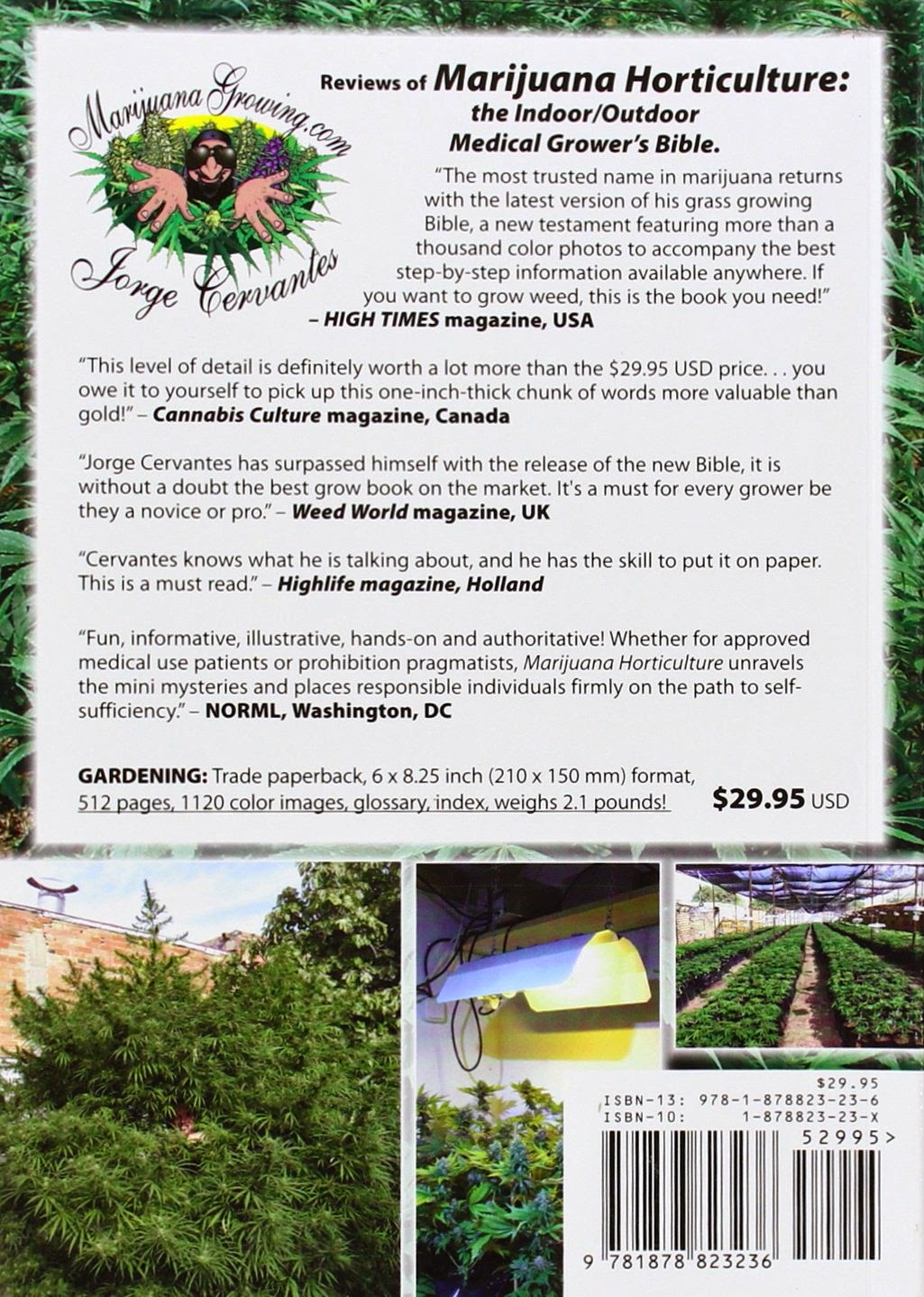
Learn It All ! The Medical Growers Bible CLICK HERE!


Medicinal maryjane, otherwise called Cannabis, furthermore spelled as Marihuana in legitimate documentation, has had commentators and supporters for a large number of years.

Medicinal maryjane is just a characteristic choice for patients who decide to utilize it as opposed to depend on solution pills or other pharmaceutical medications. Cannabis has been utilized for restorative purposes for give or take 4,000 years. In the mid 3rd century AD, Hua Tuo was the first known individual in China to utilize cannabis as a soporific. Cannabis was recommended to treat spewing and draining. From that point forward, Cannabis has been utilized as a part of Ancient Egypt, India and numerous Islamic nations for therapeutic purposes. William Brooke O'Shaughnessy , an Irish specialist has been said to be in charge of conveying Cannabis toward the Western World as a restorative treatment in the 1830's. It was utilized for the most part as treatment for headaches, as a tranquilizer, as a pain relieving and anticonvulsant. Cannabis utilization began to end up minimized in the United States in 1937 with the Marijuana Tax Act- making cannabis disliked and profoundly condemned. In 1970, congress passed the Controlled Substance Act as Title II of the Comprehensive Drug Abuse Prevention and Control Act of 1970, revoking the 1937 Marijuana Tax Act. The Controlled Substance Act arranged Cannabis as a Schedule 1 Drug.

Is This A "Weed" Or A Schedule One Drug? 

A Schedule 1 Drug is characterized as:

(A) The medication or other substance has high potential for ill-use.

(B) The medication or other substance has no right now acknowledged medicinal use in treatment in the United States.

(C) There is an absence of acknowledged security for utilization of the medication or other substance under medicinal supervision."


"No medicines may be composed for Schedule I substances, and such substances are liable to creation portions by the DEA" (Controlled Substance Act 1970.) Since 1970, the Federal Government has gathered Cannabis with different medications, for example, GHB, Dimethyltryptamine, Heroin, and Mescaline.

One conspiracy behind the illegalization of pot needs to do with the Dupont Company and numerous different commercial enterprises in the 1930's the point at which the expression "cannabis" was instituted to darken the name of the hemp plant. Hemp was the biggest trade edit in for spendable dough America until the 20th Century. Until the 1820s with the presentation of the cotton gin, 80% of all materials, fabrics, garments, material, curtains, bed sheets, and so forth were produced using hemp. In 1916, the U.S. Government anticipated "by the 1940s all paper would originate from hemp and that no more trees need to be chopped down." Government studies report that 1-section of land of hemp equivalents 4.1 sections of land of trees. In 1937, the Dupont Company licensed the methodologies to make numerous plastics from oil and coal. Synthetics, for example, plastics, cellophane, celluloid, methanol, nylon, rayon, and Dacron could now be produced using oil. Common hemp industrialization would have demolished more than 80% of Dupont's business.

Andrew Mellon was Dupont's essential financial specialist and he got to be President Hoover's Secretary of Treasury. He delegated Harry J. Anslinger, his nephew-in-law, to head the Federal Bureau of Narcotics and Dangerous Drugs. Not long after these arrangements, hemp was announced to be a risky substance and started to be alluded to as "marihuana"- a Mexican slang word. Marihuana was set in the media as a substance to be rebuked for free ethics, destructive mischances and crazed conduct. Generally, the expression "hemp" was not joined with "marihuana" any more – despite the fact that they were one in the same. A few truths about hemp are: 1.Hemp has a higher quality fiber than wood fiber 2.Far less scathing chemicals are obliged to make paper from hemp than from trees 3.The plant becomes rapidly to development in a season where trees take a lifetime. 4.Hempen plastics are biodegradable  (Yurchey – 2005)

After all the promulgation driving out reality, in September 1937, hemp got to be unlawful. Today, the generation cannabis, hemp and therapeutic weed are still illicit regarding the Federal government. At that point, in 1996 California lead the route with Proposition 215 added Section 11362.5 to the California Health and Safety Code, which:

• Exempts patients and characterized guardians who have or develop pot for therapeutic treatment prescribed by a doctor from criminal laws which generally forbid ownership or development of cannabis.

• Provides doctors who prescribe utilization of pot for therapeutic treatment might not be rebuffed or denied any privilege or benefit.

• Declares that the measure is not be understood to supersede restrictions of behavior jeopardizing others or to excuse preoccupation of cannabis for non-restorative purposes.

Starting 2012, there are 16 states in the United States that have permitted therapeutic maryjane to be a honest to goodness manifestation of solution. These states are: Alaska, Arizona, California, Colorado, DC, Delaware, Hawaii, Maine, Michigan, Montana, Nevada, New Jersey, New Mexico, Oregon, Rhode Island, Vermont, and Washington. Starting 2008, 25% of Americans live in a state where restorative pot is legitimate on the state level. Each of these states has their own regulations of restorative cannabis and how it is executed in each state.
 The Medical Growers Bible...
So if it is legal in your state and you need to learn more grab this "Bible" on growing, should be all you ever need!
Get Your Copy On Sale Now! Click Here!